
Côte du Rhône: The Wine You Need In Your Cellar
In today’s world of ultra-lux, exclusive, elusive, elite, everything, it’s so hard to find reliable, available, enjoyable quality. Luckily for wine enthusiasts, there is a 200km stretch of land in Southeastern France that has what we need.
Much of the discussion about Côte du Rhône wine begins with it being good value. This is an unfair way to introduce the appellation because it programs our minds to think of it being “good for the price”. But if we take away the price conversation, we are left with discussing how Côte du Rhône is simply “good”.
Of course, the value is inescapable. Right now, in the LCBO, there are several beautiful Côte du Rhônes under $20 that will please seasoned connoisseurs. Any legit French bistro in your city will have a selection of CdR, just as the Bistros in Paris do.
But CdR is not just for the wine snobs. These wines are as easy on the palate as on the wallet. The character of a CdR wine is generally bold, ripe, juicy with a distinct spiciness. Rhône wines tend to impart garrigue notes; a sun-baked earthiness combined with the aromatics of hearty herbs that grow in the region. It all comes together in an approachable, satisfying wine that is also incredibly versatile when pairing with food. Though CdR wines have a general character, there is diversity and nuance for your palate throughout the region. If you are new to Cote du Rhône, there is a hierarchy to be aware of.
At the base is good ol’ Cote Du Rhône, making up two-thirds of wine production in the region.
There is a step up to Villages, which have lower yields and slightly higher ABV. If you like to age wine, this is where you would start in the Rhône. Adding a little more prestige are the “Named” villages, which are allowed to state their names on the bottle.
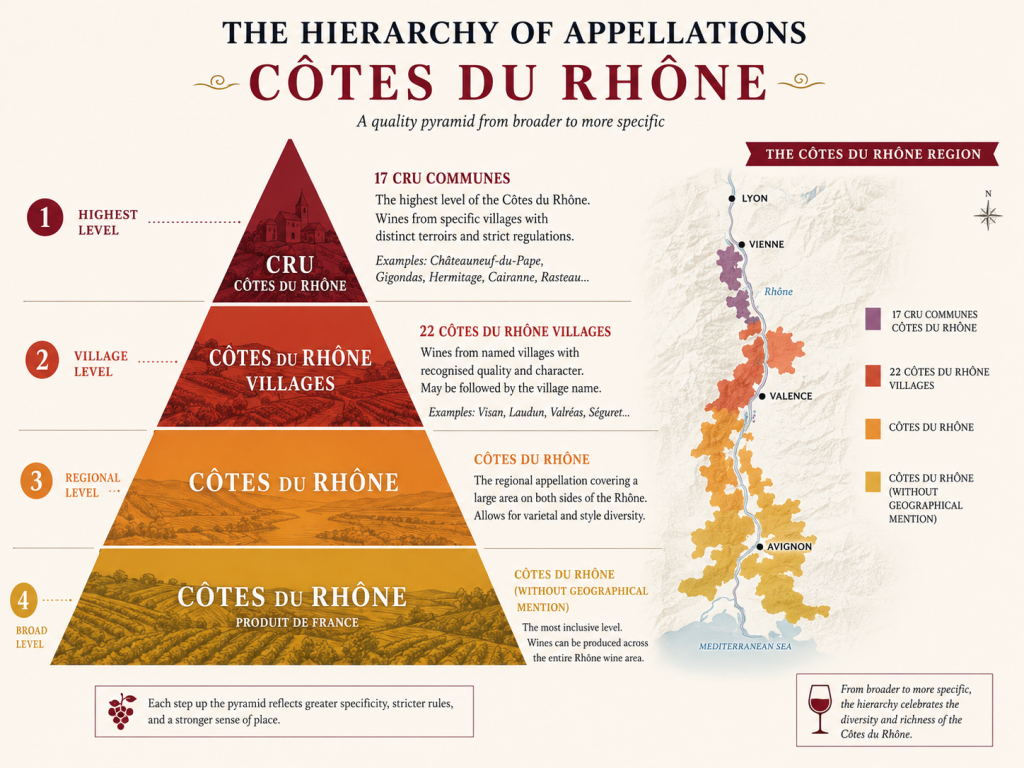
The top of the pyramid are the crus. If you are a fan of Will Ferrell, you may remember Ron Burgundy bemoaning: “Do you have any idea what it’s like to drink half a bottle of ketchup thinking it was a bottle of 1946 Chateauneuf du Pape?”; which added to CdP’s stature as the most famous cru of the Côte du Rhône. The average person would likely be able to discern the difference between a cru and a bottle of Heinz, as the cru is the most complex and sophisticated wine of the region, with a price tag to match.
But we aren’t here to talk about the fancy stuff. As my French friends have explained to me, unless you have a well-trained, sophisticated palate and really understand all the nuances of the Rhône, the only thing that will be more gratifying about drinking the more prestigious appellations is the satisfaction of being rich.
The Villages offer a touch of prestige and generally stay in that good value conversation. But the base Cote du Rhône wines rarely fail to deliver a good time. Especially paired with food. If you are looking for a reliable wine to always have in your cellar for any occasion, they are an excellent candidate. Cote du Rhone is the Toyota of wines. It’s nice to drive a Lamborghini once in a while, but it’s high maintenance, you can’t take passengers, you worry where to park it, and unless you are on a racetrack, you can’t really drive it properly. For most days, you want a Toyota. Reliable, versatile, and still has all the features you need.
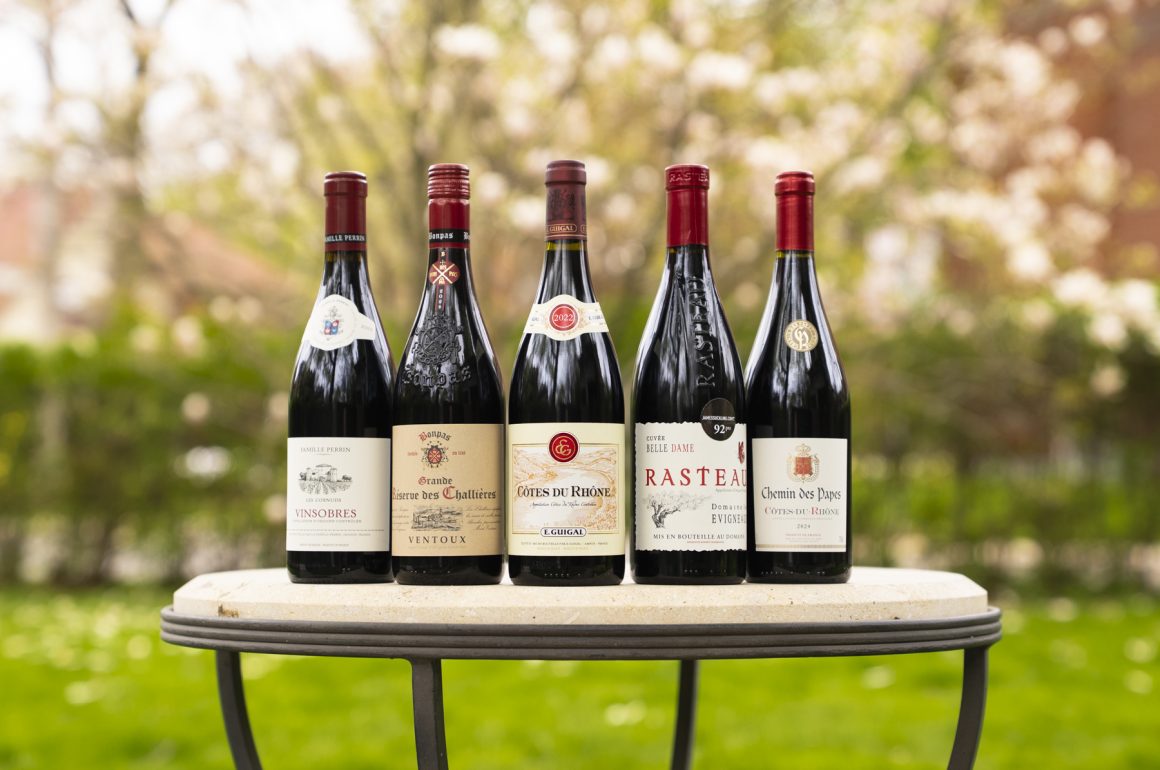
So, if you are looking to add some daily drivers to your wine rotation, here’s five you can try today:
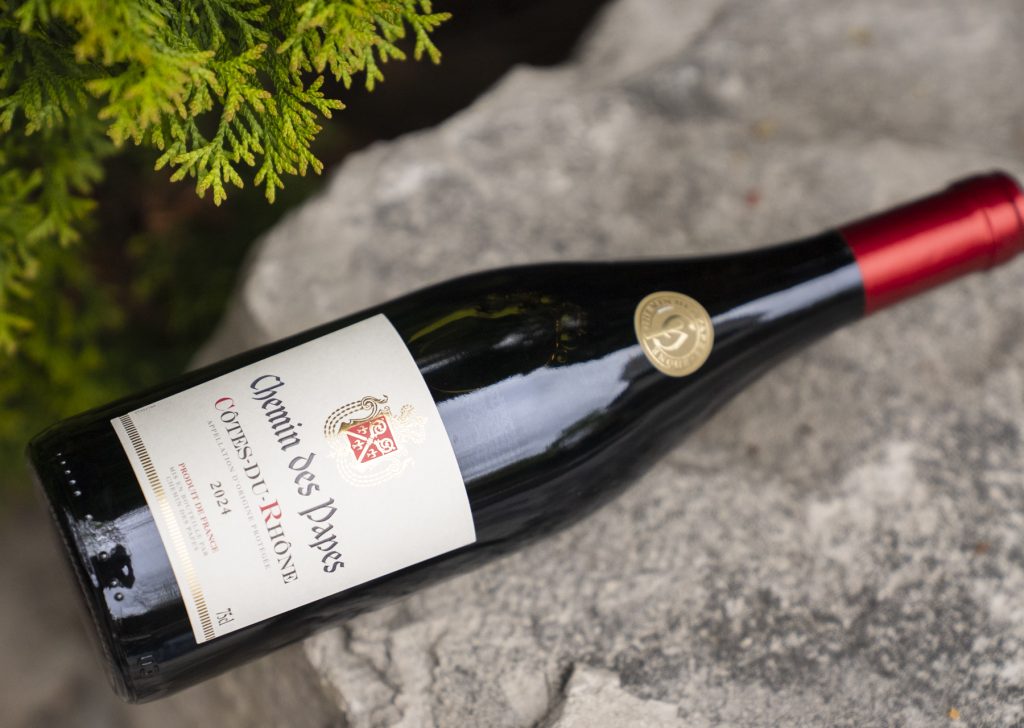
Côtes-du-Rhône Chemin des Papes – $12.20
No, that price is not a typo. Warm, supple, and richly textured. Well-balanced between fruit intensity and savoury spice.
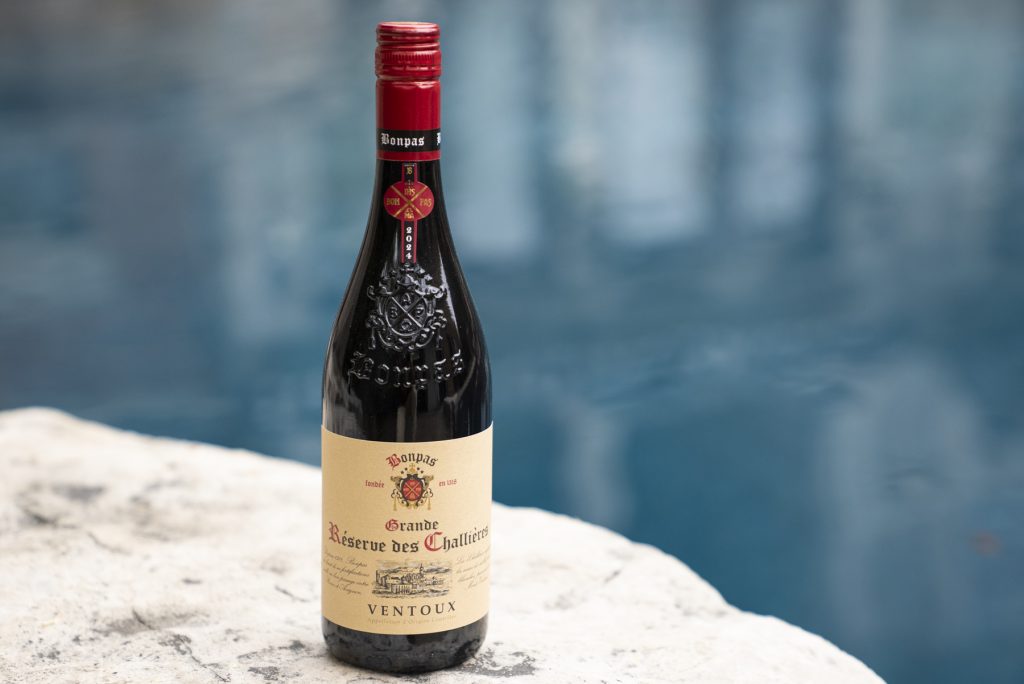
Ventoux Grande Réserve Des Challières Bonpas – $14.05
Juicy red fruit flavours, balanced with a pleasing spiciness and generous mouthfeel.
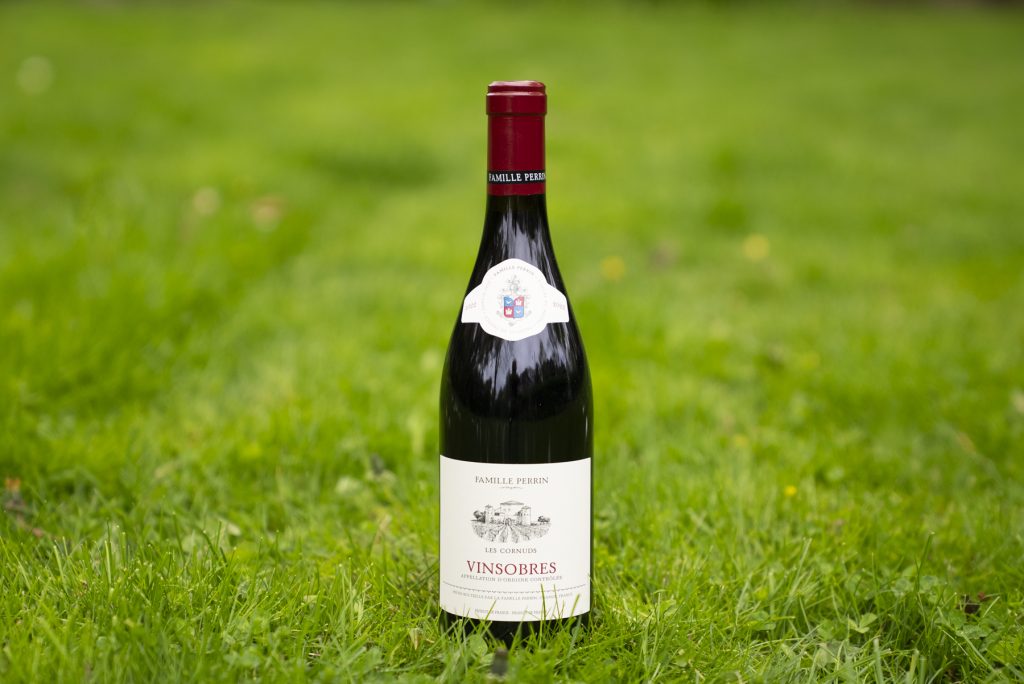
Famille Perrin Les Cornuds Vinsobres – $21.95
Fresh, fruit-forward crowd pleaser from the Southern Rhône.
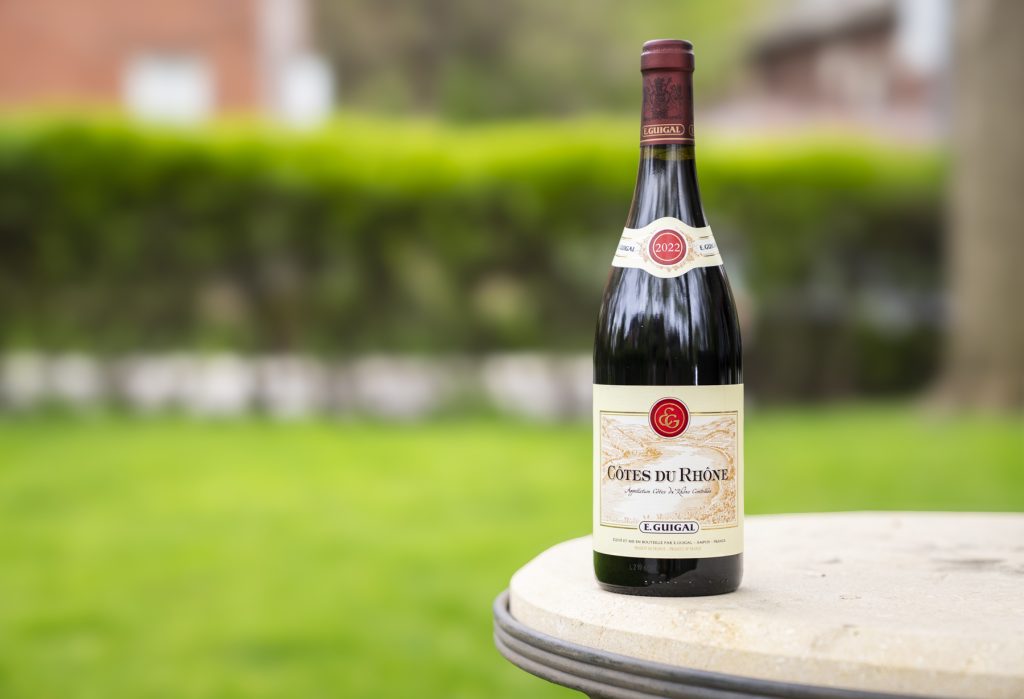
E. Guigal Côtes du Rhône – $25.95
Robust and balanced. Dark fruit flavours with a hint of pepper. Try chilling slightly for a summer barbecue.
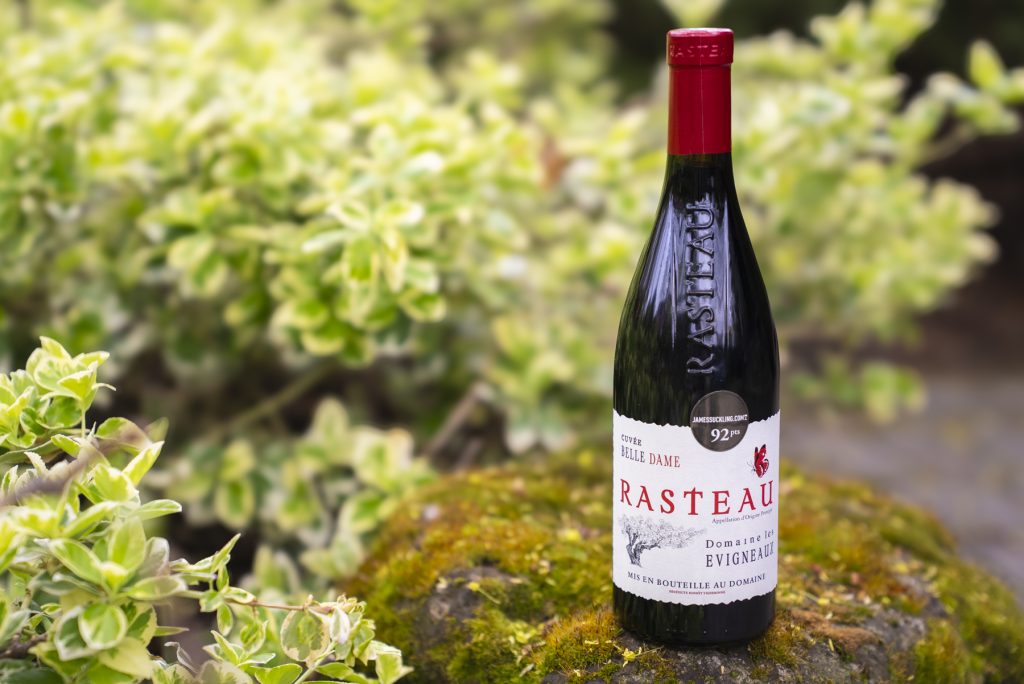
Domaine Les Évigneaux Rasteau – $28.95
Warm and savoury with a pleasantly boozy presence. Rasteau is a Villages appellation and considered the “Poor Man’s Châteauneuf-du-Pape” due to a similar quality and character.


Leave a Comment