
How Well Do You Know Your Sangria?
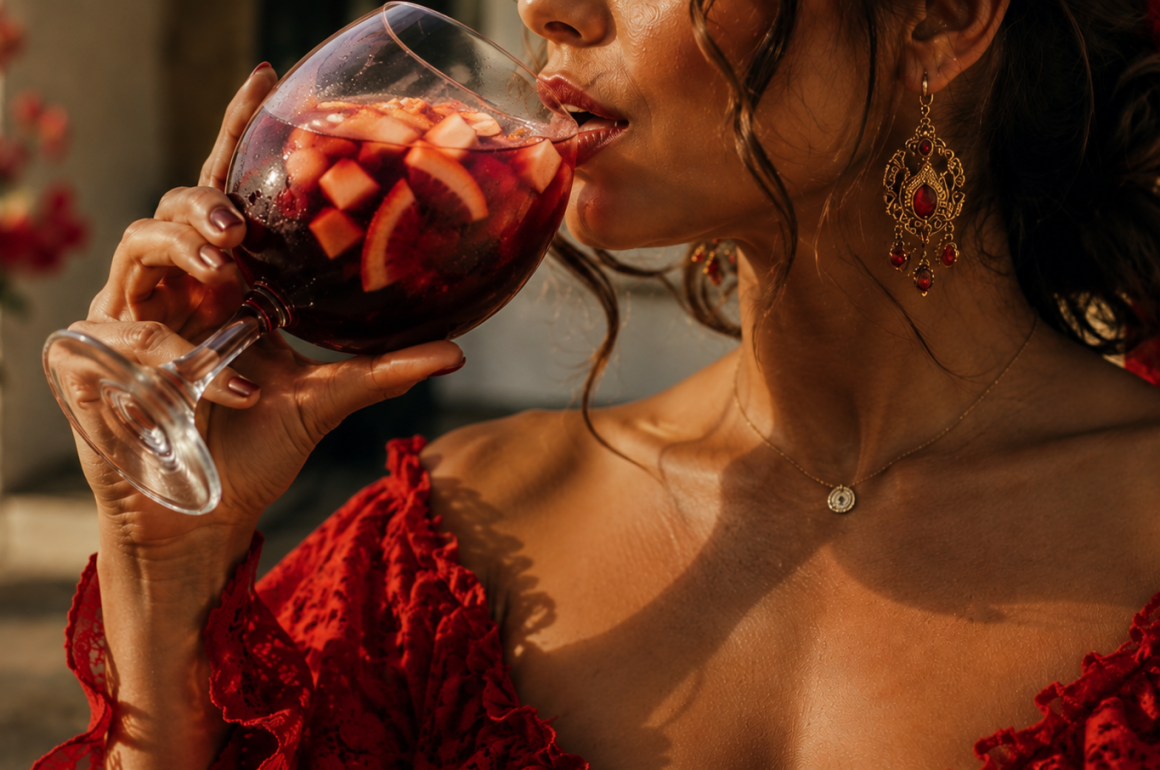
If Sangria were a person, she’d be a radiant woman with a sun-kissed glow, her effortless, wavy hair tied back with a bold red silk scarf. Picture her wearing a breathtaking, fashion-forward, blood-red traje de flamenca. Her vibe? Sophisticated, eloquent, and deeply empathetic. She knows exactly what your palate craves, offering a mindful, high-quality indulgence that invites you to romanticize your life with every single sip.
But beyond those comforting sips, how well do you actually know your Sangria? Is it merely an Instagram-worthy glass to order, or does it represent a distinct, passionate culture of wine and heritage?

To find out, we interviewed Chef Alberto Cano, a Mexican chef with an outstanding flair for Spanish culinary arts. Chef Cano’s lifelong passion for food and wine led him to earn a Master’s in Enology (the study of wine and winemaking) in Spain. He spent six years away from his homeland mastering his craft. Upon returning to Mexico, he opened a series of successful restaurants that continue to delight both locals and visitors alike.
What Makes a Sangria Perfect?
Perfecting Sangria is not as complex as it sounds, but it requires a careful balance to achieve the ideal texture, consistency, and flavour profile.
“The big mistake of many establishments is using sangria as a “recycling container” for bad wines or overripe fruits. A sacrilege! The key is in the maceration time.” he stated.
To prepare the drink properly before serving, it needs time for the flavours to marry.
“[cooling it in the fridge for at least two hours], so that the fruit gives its soul to the wine,” he added.
When it comes to selecting the right wine, Chef Cano notes that if we follow Iberian tradition, “the red wine is the undisputed king.”
“You don’t need a great reserve from a renowned winery; it would be a waste, as the fruits would overshadow its more complex notes,” he explained, emphasizing the need to balance the wine with the fruit.
Instead, he recommends a young wine with a vibrant fruit profile and a medium body. According to him, a good Tempranillo or Garnacha is the golden rule, as their specific acidity and tannins pair beautifully with citrus without turning bitter.
Is Sangria Red by Default?
There is a lively debate surrounding the colour of Sangria, alongside an ongoing critique that the drink is being “white-washed” by the introduction of non-red varieties like rosé and white.
The ancient ancestors of Sangria date back to the Greeks and Romans, who mixed water, wine, and spices to create safe, bacteria-free drinking water. Over the centuries, this recipe evolved in Spain and Portugal into a festive wine punch, eventually earning the name “Sangria”—derived from the Spanish word sangre (blood)—due to its deep red hue.
However, Chef Cano takes a more open-minded approach toward these modern variations:
“As a winemaker, I would tell you that the purist is the red one. But as a chef who has opened restaurants and understands the current market, I say: welcome them, as long as the profiles are respected.”
In Spain, white wine Sangria is often called Clarea, and it is considered spectacular for hot summer days. As Chef Cano suggests, using an Albariño or a Verdejo—with their natural tropical and citrus notes—yields a very fine, extremely refreshing drink. Rosé, on the other hand, is more delicate and serves as the ideal canvas for red fruits like strawberries and raspberries.
Ultimately, Chef Cano is more appreciative than bothered by the innovations shaping the presentation of Sangria today.
“They demonstrate the evolution of gastronomy. That said, they require the fruit to match the wine,…you have to have good judgment,” he quipped.
What is the Ideal Sweetness? (And Are the Fruits Limited?)
Chef Cano openly shares his dislike for certain commercial Sangrias, noting that they often taste like cough syrup and disrespect the natural acidity of the wine. He strongly prefers the sweetness to come solely from the natural ripeness of the fruit.
However, if you happen to use a drier wine, he acknowledges that some people prefer adding a hint of simple syrup or Licor 43, which dissolves easily. To elevate the drink with a premium Spanish identity, he recommends a splash of Pedro Ximénez as a great alternative.
“The key is that when you take a sip, you feel the freshness and the fruit, not a sugar bomb that gives you a headache the next day,” he added.
As for the fruit, Sangria relies on a sacred foundational structure: citrus. Orange and lemon are essential ingredients, providing the vital acidity that cuts through the sweetness and enlivens the wine. Apple and peach are also deeply traditional, as they absorb the wine beautifully without falling apart.
Chef Cano agrees that there is plenty of room for flexibility when mixing fruits into your pitcher:
“In my restaurants, I always tell the guys that the kitchen is alive. If you use white wine, you can add green grapes, green apple, or even a touch of mint. If it’s a red, you can innovate with a touch of cinnamon or a splash of brandy or orange liqueur like Cointreau to give it more body. The only rule is that the fruit should be firm and fresh; we don’t want a puree floating in the pitcher”.
How Does Chef Cano Enjoy His Own Sangria?
To wrap things up, Chef Cano revealed his personal secret and signature style for crafting and enjoying his favourite summer drink:
“I like it the old-fashioned way, the one we prepared this summer on the terrace: based on a good young Tempranillo, plenty of orange, lemon slices, vine peach, a touch of brandy to give it character, and a sprig of cinnamon to macerate gently. A lot of ice in a clay or thick glass pitcher.”
And what about the perfect pairing for Sangria à la Chef Cano?
“We’re talking about Spain and summer. There’s nothing better than some good tapas, an acorn-fed Iberian ham, some pieces of aged Manchego cheese, homemade croquettes, or fried calamari,” he suggested.
He added that if you are feeling inspired, a good seafood paella is the ultimate companion. The contrast of cold, fruity Sangria with the salty, savory elements of traditional tapas is, quite simply, the perfection of life.
Now that you know the rich history and culinary secrets behind Sangria, why not share a pitcher this weekend with friends—or perhaps pour a glass tonight over dinner to cap off a lovely day?Stay tuned to www.thisrefinedsociety.com for more stories about your favorite sips.


Leave a Comment